
June 30, 2025
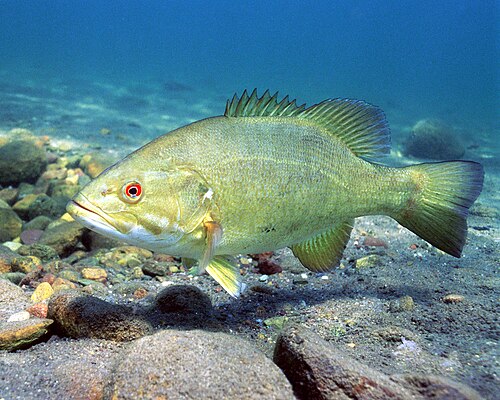
My MSN browser scroll included an article on the attempts to eradicate an invasive fish from a midsized lake in the Adirondacks. While the fish are native to North America, they were introduced widely across the Adirondacks in the 1900’s, where they took over many lakes. Their arrival led to declines of native fish species and stunting of growth rates in prized brook and lake trout, which compete for the same prey. A study published in the journal Proceedings of the National Academy of Sciences revealed that in response to the annual removal of a quarter of the invasive fish from the lake, the numbers of fish 5 inches (12.7 cm) and under have increased while fish larger than 12 inches (30.5 cm) were mostly eliminated. The findings have important implications for fish management. It highlights the importance of preventing non-native species invasions before they happen and illustrates how efforts to suppress a species may backfire, leading to the opposite effect. The smallmouth bass rapidly evolved to grow faster and invest more in early reproduction, leading to an even larger population of smaller fish.
When I went online, I found the smallmouth bass (Micropterus dolomieu), also known as brown bass, bronze bass, and bareback bass, is a freshwater fish in the sunfish family (Centrarchidae). It is the type species of its genus Micropterus (black basses) and is a popular game fish throughout the temperate zones of North America. Males are generally smaller than females. The males tend to range around two pounds, while females can range from three to six pounds. The maximum recorded size is approximately 27 inches (69 cm) and 12 pounds (5.4 kg). The color of the smallmouth ranges from golden olive to dark brown dorsally which fades to a yellowish white ventrally with dark brown vertical bars or blotches along the body and dark brown horizontal bars on the head. The combination of muscular fusiform body shape and camouflage like coloring make these fish highly effective ambush predators. The color varies greatly depending on age, habitat, water quality, diet, and the spawning cycle. The fish has spread through stocking, along with illegal introductions, to many cool-water tributaries and lakes in Canada and especially the US.
Peter McIntyre, professor in the departments of Natural Resources and Ecology and Evolutionary Biology and among the senior authors, said, “Twenty-five years ago, Cornell’s Adirondack Fishery Research Program set out to test whether we could functionally eradicate smallmouth bass from a lake. It took us 25 years to prove why the answer is no: the fish evolved to outmaneuver us.” Efforts began in 2000 to suppress bass in Little Moose Lake in the Adirondacks by using a generator to electrify the water to temporarily stun fish (electrofishing). Scientists then scooped them up, released the native species back into the lake, and removed all captured bass. The removal of 1000’s of fish worked for several years, then the smallmouth began to make a comeback, especially the smaller fish. Genetic analysis revealed that selection pressures from removing fish resulted in dramatic genetic changes between 2000 and 2019 in the genomic regions associated with increased growth and early maturation.
THOUGHTS: The introduction of smallmouth bass to the mountain lakes presented a new apex predator. The brook (Salvelinus fontinalis) and lake (Salvelinus namaycush) trout are threatened by warming surface waters and depleted oxygen levels in cooler deeper water during the summer, and then competition with the smallmouth. The genetic evolution resulted in a lose-lose for anglers. The trout are disappearing, and the smallmouth are too small to keep. Ecosystems are delicate balance and human intervention is rarely positive. Act for all. Change is coming and it starts with you.
 A travelers odyssey