
September 26, 2025
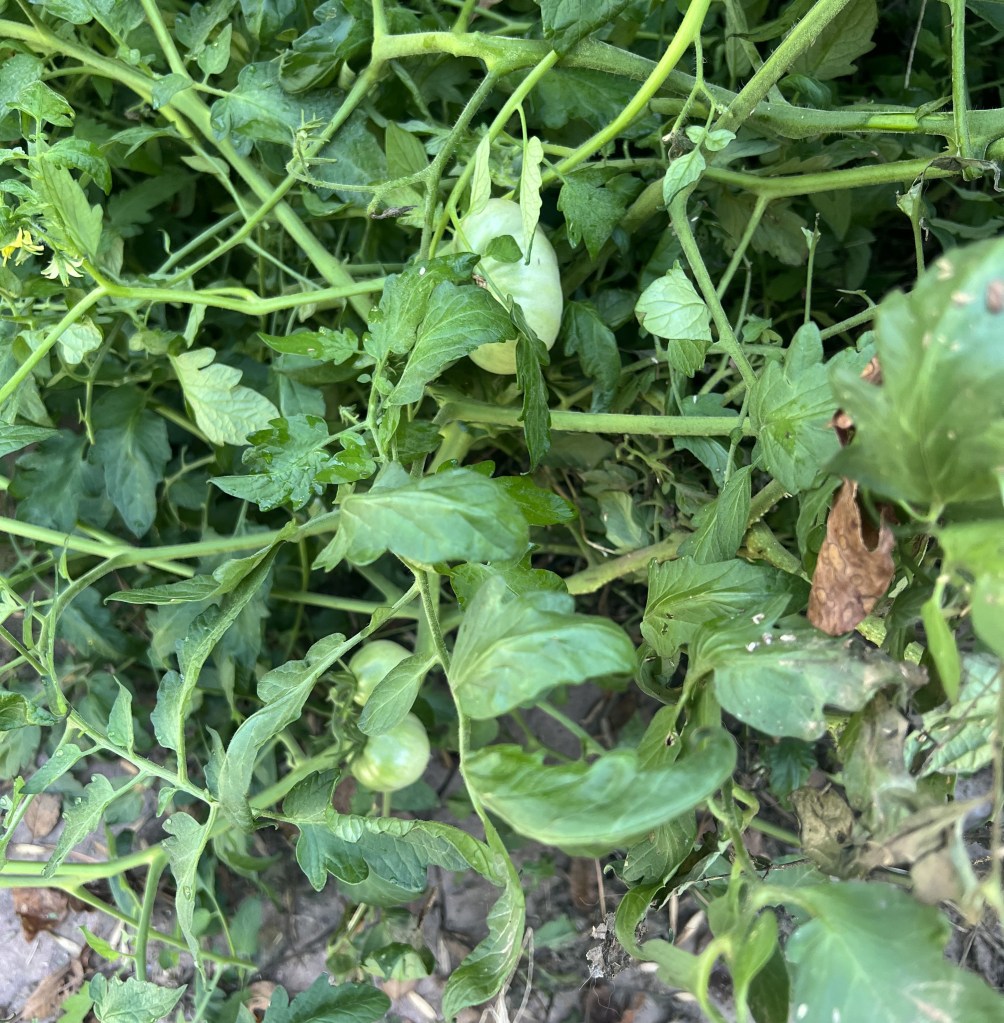
I toyed with the idea of tearing out my tomato (Solanum lycopersicum) plants since the beginning of August. They quit producing and while I was getting scattered flowers, they did not result in fruit. The exception was my super sweet 100’s which were doggedly producing, but the size of the cherry tomatoes had dropped from over a nickel (US) to less than a centavo (Mexico). My gardener friend went on an extended trip during this time and when she returned many of the plants had died and she tore them out. What stopped me was the weather began to cool, and we had a period of rain, so I did not feel the need to water. Since all I was doing was monitoring the plants, I decided to leave them. I still needed another gallon (3.8 liters) of tomatoes to augment the gallon I had frozen in June in hopes of more pasta sauce. I had only given a quick scan to the plants along the back of the house for several days. These Arkansas travelers are an indeterminant (keep growing) variety that had spent the summer producing vines without any fruit. You can imagine my surprise when I gave them a more thorough inspection and found dozens of healthy green tomatoes up to a US half dollar size.
When I went online, I found in biology and botany, indeterminate growth refers to growth that is not limited (terminated) but continues to grow. In contrast, determinate growth stops once a genetically predetermined structure has completely formed. That means any plant that grows and produces flowers and fruit until killed by frost or some other external factor is called indeterminate. Many tomato varieties (especially heirloom) tend to grow in a rangy fashion and produce fruit throughout the growing season. A determinate tomato plant grows in more of a bushy shape and is most productive for a single, larger harvest. It then either tapers off with minimal new growth or fruit or dies. The Arkansas Traveler is an open-pollinated heirloom variety bred by the University of Arkansas in 1968. The plant is indeterminate and produces round red fruits weighing approximately 6 ounces (170 grams).
When I told Melissa about the green tomatoes flourishing on these indeterminant plants she suggested if they did not ripen (for my pasta sauce or salsa), we could use them for green tomato relish. Coming from the North I have never eaten this relish, although I have heard of it, but this is a popular and traditional staple in Southern cuisine. This sweet and tangy relish is often referred to as “chow-chow” and is especially common towards the end of the summer harvest season to use up unripe tomatoes. Green tomato relish is traditionally made when the season’s last tomatoes fail to ripen on the vine and as a way of preserving the harvest to enjoy throughout the winter. The unripe tomatoes are mixed with peppers, onions, and pickling spices. The relish can be preserved through water bath canning for long-term storage. Another (Southern) use of green tomatoes is to cut them into 1/4-inch (0.6 cm) slices, season with salt and pepper, coated with plain, coarse cornmeal, and shallow-fry slices in bacon fat. We had tried this (and green tomato pie) earlier in the year.
THOUGHTS: I am interested in trying the unripe fruit of my indeterminant tomatoes as both relish and again fried. The relish is a traditional topper or side dish that provides a savory accent to meats, fish, or potatoes (Solanum tuberosum). It is suggested to use bacon fat when frying, which is called “liquid gold” in traditional Southern cooking, as it adds a smokey, salty, and savory depth of flavor that is difficult to replicate with other fats. While we did not fry tomatoes, my mom always had a can of bacon dripping beside the stove to supplement the can of lard in the cupboard and I still save bacon fat the same way today. The practice is rooted in the practicality and “no waste” philosophy of southern cuisine as well as my rural Midwestern roots. “You can take the boy out of . . .” Act for all. Change is coming and it starts with you.
 A travelers odyssey