
October 01, 2025
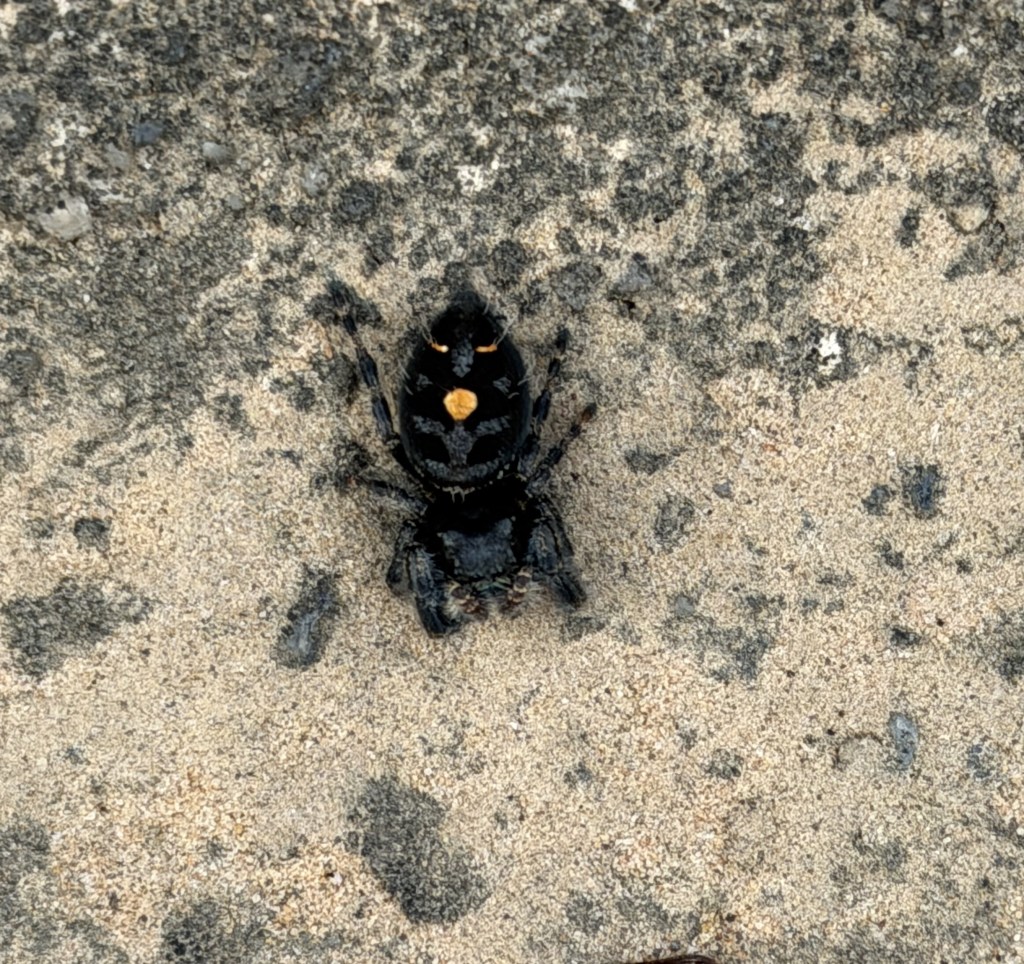
When I opened my mailbox this morning to retrieve my newspaper, I was surprised by something jumping out of the mail. The mail itself was covered by a fine gauze-like webbing. I figured this was some sort of spider that had decided to take up residence in the dark confines of my closed mailbox. This did not strike me as unusual as many spiders are on the move at this time of year seeking a place to overwinter. I was surprised by the distance the spider had jumped. It had shot off my paper and onto the ground several feet away. When I Goggled a picture of the spider, I found it was aptly named a Bold jumper.
When I went online, I found the bold jumper (Phidippus audax), also known as the daring jumping spider, is a common species of spider belonging to the genus Phidippus. This group of jumping spiders easily identified by their large eyes and their iridescent mouth parts (chelicerae). They are typically black with a distinct white triangle on their abdomen. Like all jumping spiders, they have excellent stereoscopic vision that aids them in stalking prey and facilitates visual communication with potential mates during courting. The species are native to North America and have been introduced to Hawaii, Nicobar Islands, Azores, and the Netherlands. The Bold jumper is a solitary carnivore that uses their highly specialized eyesight to actively hunt and stalk a variety of insects and non-insect terrestrial arthropods such as caterpillars (order Lepidoptera), dragonflies (infraorder Anisoptera), grasshoppers (suborder Caelifera), and other spiders (order Araneae). They are one of the most common spiders found in agricultural areas and have been studied to determine their impact on crop pest populations. New Hampshire Governor Chris Sununu signed the HB 318 bill on June 11, 2021, designating the bold jumper as the state spider following a campaign by a class in Hollis, New Hampshire.
The bold jumper is often found living near humans. Bites are rare but may occur if they feel threatened or are mishandled. Bites are often described as mildly painful and are not considered dangerous. Symptoms often include localized redness, itching, and swelling for one to two days, if at all. Medical attention is only advised if symptoms worsen or abnormal symptoms arise. If bitten, you should wash the area with water and a mild soap. A cold compress may be used to treat swelling and aspirin, and acetaminophen may be used for pain. As a major predator of crop pests, they have been studied to determine their impact on pest insect populations. However, in addition to eating pests, they also eat beneficial insects such as pollinators. My jumper went to the ground and then calmly stayed in place as I maneuvered my camera to take a photo. It obviously did not consider me a threat and having been around them frequently I did not consider it a threat either. Unlike most spiders, the bold jumper does not build webs to catch prey.
THOUGHTS: I found it curious that the bold jumper does not build a web to catch prey, yet there was an obvious webbing on my newspaper. This was the start of the thin sheet of silk that would become the nest for an egg-sac. This is usually built in hidden areas under rocks, bark, or leaves, but the inside of my mailbox seemed to serve. The jumper was preparing to create a secluded nest to provide for the next generation in the spring, but my mailbox was not the secluded location she sought. Humans find similar radical shifts in environment. A site along the ocean seems perfect, until the storm surge from a hurricane washes out the foundation and sweeps the house into the sea. Building needs to take potential environmental shifts into account. Both for weather impact and the impact of encroaching on fragile ecosystems. Act for all. Change is coming and it starts with you.
 A travelers odyssey