
April 08, 2026
After I posted my last blog (Hardiness) I was informed (by Melissa) that the Hardiness Zones had indeed changed and we were no longer in 7b. The update that I had mentioned had reclassified the Arkansas River Valley as zone 8. According to the updated 2023 US Department of Agriculture map, Greenwood is now in Zone 8a. This indicates a moderate climate where average annual extreme minimum winter temperatures range from 10F to 15F (-12C to -9.5C) and the last spring frost typically occurs around March 25th to April 3rd. There is still 10% chance of a later frost lasting until April. That means my thinking I was testing the envelope by planting two weeks early was instead getting my seeds (and young plants) in the ground right on time. That worked out well as when I went to the local hardware store for several bags of potting soil I saw they had a big sale on both flowers and a variety of vegetables. Having already planted my seeds, I decided to go ahead and buy my plant starts as well.
When I went online, I found choosing between seeds and plants (starts) depends on your budget, time, and the plant type. Seeds are often better for fast-growing crops (better value and more variety) like lettuce (Lactuca sativa) and spinach (Spinacia oleracea), beans, and herbs. Starter plants are best for high-maintenance, slow-growing, or long-season crops like tomatoes (Solanum lycopersicum) and peppers (Capsicum annuum) to guarantee a harvest. Seeds have the advantage of inexpensive, offer a variety of heirloom choices, and have healthier root systems. They require more patience and specialized equipment (lights/trays) to start them indoors to have them ready for the growing season. Starts can provide immediate gratification, save time, and have a higher success rate for beginners. They are more expensive and have limited variety. Small gardens benefit from buying plants to maximize production, while large gardens can save money using seeds. A mix of both seems best.
Last year I bought starts early and did not get them in the ground for a week. Even though I tried to keep them watered, they looked sickly by the time they were planted and several died forcing me to buy new starts to replace the ones I previously bought. This year I ended up buying my starts early in the afternoon but knew I needed to get them in the ground. I worked into the evening remixing potting soil, planting six jalapeño peppers, five bell peppers, and three varieties of tomatoes. Melissa likes the Sweet 100’s for salads (2 starts), I like Roma (6 starts) for canning pasta sauce, and then Arkansas Travelers (3 starts) for slicing. That left 3 Traveler starts (pack of 6) that I did not have pots for. There was a major rain forecast for the evening, so I pushed on to plant three rows of sweet corn (Zea mays convar) in the bed I had used last year for my Three Sisters (corn, beans, squash). Everything was done in time for the three inches (7.5 cm) of rain to set everything into the soil.
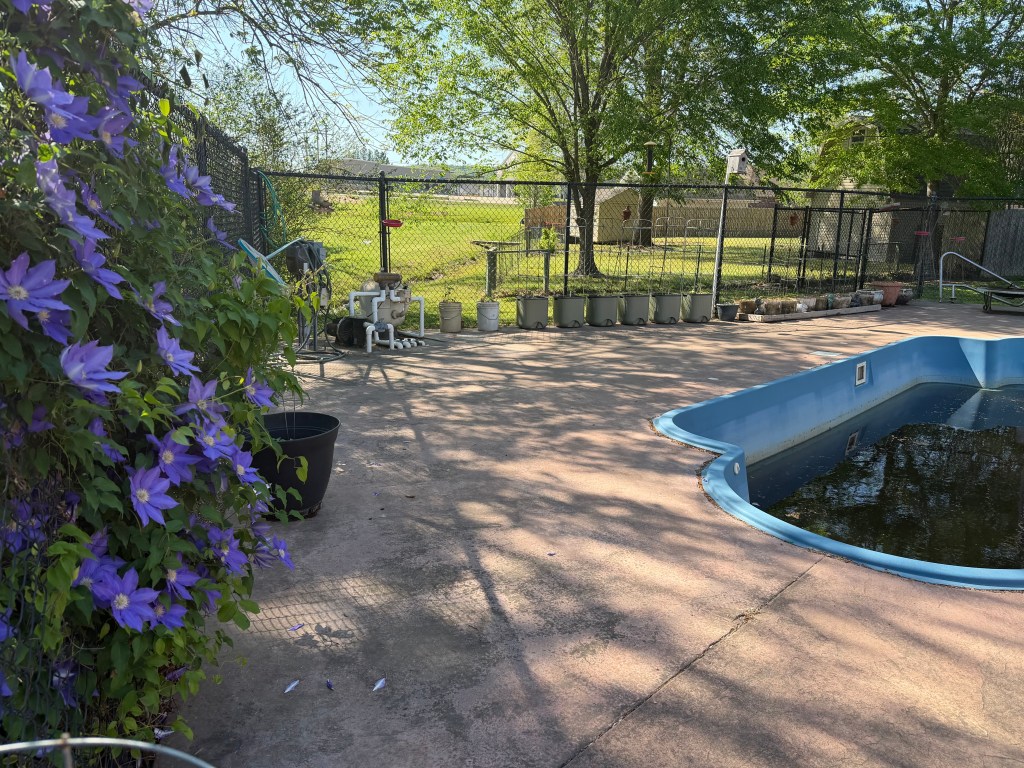
THOUGHTS: Having planted my starts I was ready for the growing season, but still had several starts not in the ground. Monday Melissa and I cleared last year’s potato beds for watermelon (Citrullus lanatus) and honeydew melon (Cucumis melo) starts. I planted the zucchini and spaghetti squash (Cucurbita pepo) in large pots and found three grow bags for the leftover Travelers. In total we have three soil beds, four raised beds, and 27 containers with a variety of seeds and starts. I also believe a mix seems to work best. That is true with my small garden, but also with our nation and world. Every dystopian society depicted in sci-fi movies is the result of a controlled lack of diversity. While that may just be perception, it is also borne out with historic civilization examples. Diversity is our strength, not a weakness. Act for all. Change is coming and it starts with you.
 A travelers odyssey