Office

Office

August 17, 2020

I have found it amazing (and been humbled) that both Melissa and I have been hired to new jobs since the pandemic began.  What has been even more amazing is that both of our jobs seem tailor made for what we are good at and like to do.  To top it off, while both jobs are traditionally office oriented, during this time of turmoil they have become work from home opportunities.  Melissa still goes into the office three times a week and I try to get there at least twice a week.  Even when Melissa goes to the office, the meetings she attends are Zoom calls, even when the participants are seated in a cubicle eight feet away.

Both of us have found there are good and bad sides to this new office environment.  Working from home means there are less of the normal distractions that come with interaction in an office setting.  Starting a new job during the pandemic does make it harder to connect to your co-workers.  While the zoom calls Melissa frequents identify the names of the participants, it does not say what they do or their position in the company.  This has caused her to create flow charts outlining who reports to whom and what their job is.  I only had a couple of visits with my people before the lockdown.  Even though we have reopened, it is with masks and distancing.  That makes it hard to connect a name to a face when the face is generally covered.  It also limits my face time which has been an important way I used to connect in the past.

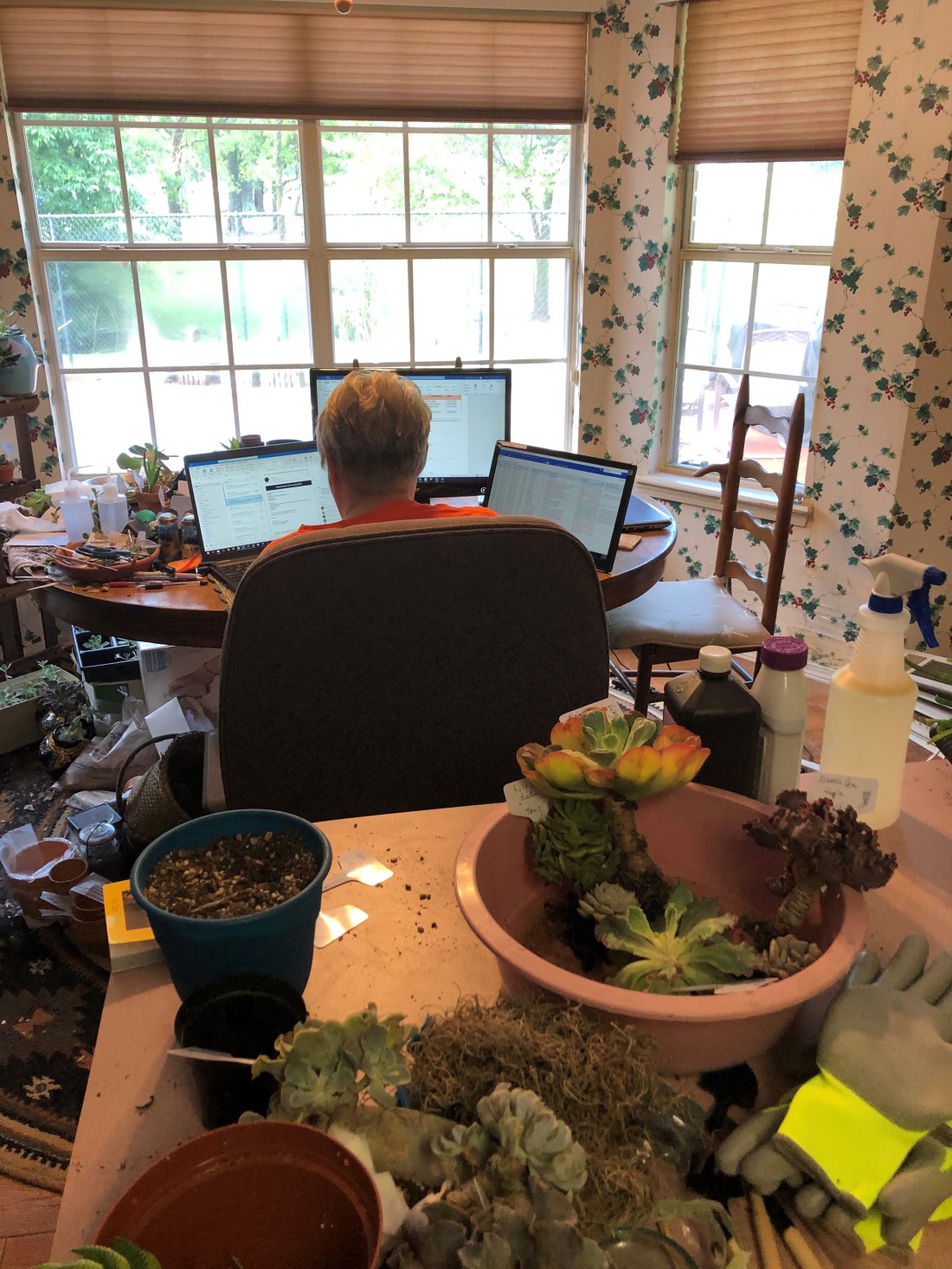
Another change has come in the way we use technology to accomplish what we do.  I had used extended screens before but never really found them useful.  Now that I commandeered Melissa’s home office, I have the luxury of a 30” monitor sitting next to my laptop.  This initially provided a cool way to play my game but has since become an essential way for me to write.  I pull up different documents or websites and cut and paste between the screens and rewrite.  It is now hard for me to sit down with just my laptop.  Melissa has it harder.  At work she uses three monitors to transfer thoughts and images about her various databases.  Once you get used to enhanced access, it is hard to go back.

THOUGHTS:  Melissa was bemoaning how she only had two screens when she worked at home.  I mentioned we had an additional flat screen monitor in the bedroom that was not being used.  This was an older version that had a VGA connection, but it was larger and available.  We went to the store and bought the right converter and she was set.  Her work on Friday was back to the new normal.  This new normal is forcing us to reevaluate not only what is essential work, but how the work we do is being done.  More work is being done from home and may never go back to the office.  Robots are being employed to accomplish repetitious jobs faster and with greater accuracy.  Just as the information age phased out old jobs and created new ones, so has the pandemic.  What has remained is the human element of a desire to connect with others.  Connecting while distancing sounds like the next wave of self-help books.  Change is coming and it starts with you.

Anti-racist

Anti-Racist

August 15, 2020

I joined a weekly webinar on Friday that continues weekly over the next month.  The purpose is to explore what it means to be anti-racist.  When I received my preliminary confirmation, I was informed 452 people had registered for the webinar.  There were 315 who initially logged on, and if I understood the stats the site provided, there were 167 who actively made responses to the poll questions.  When it started, the chatroom lit up wondering why you could not see any of the participants.  The answer given was this was a webinar, not a zoom call or chat.  I am still learning this technology.

The event was led by Warren Chalklen, PhD.  He had grown up in South Africa during Apartheid as a white boy with a Black sister (during strict segregation).  This drove him to explore anti-racism for his degree and he now teaches on racial equality.  One of his opening statements was that anti-racism is my life.  I often get it wrong and I often do not do enough, but I am trying.   He challenged us to live in the Zone of Proximal Development, or that uncomfortable and painful space between what you know and what you do not know.

I heard a consistent refrain.  To practice anti-racism, you need to learn a new language.  We might tell someone my Black (or Mexican or Asian) friend is coming over tonight but rarely will we say my white friend.  For most of us, whiteness is assumed unless specified.  Chalklen reconfirmed three other definitions I have heard elsewhere concerning racism.  To merely declare that I am not a racist is to be apathetic toward the effect of racism.  I then define the beliefs and behaviors that frame the world as “race-neutral.”  To be non-racist suggests I have done the work to understand about racism.  It also implies there is an endpoint to doing this work.  To be anti-racist is to ask conscientiously, frequently, and consistently how you can make equitable choices daily.  This requires action to dismantle racism.

THOUGHTS:  One of the difficulties Melissa and I have faced as we explore anti-racism is the action steps.  We are both problem solvers and while our search has raised many questions, it has not offered solutions.  I found it interesting that two different people, one Black and the other white, have addressed this with a simple answer, “anything.”  Like Chalklen, I will get it wrong and I will not do enough, but I will be starting the necessary work.  The work seems different to me this time.  This is not “Black work” or “white cooperation,” this is work acknowledging the damaging effect of systemic racism on our country.  It is time to roll up our sleeves.  Change is coming and it starts with you.
Stakes

Stakes

August 14, 2020

After I posted my Blog on moles, I received several responses offering remedies.  Two of these concurred the reason the moles were in my yard in the first place, was to feast on the grubs and worms.  When I checked this online (my new World Book Encyclopedia) it said while you probably do not want to get rid of the beneficial effects of the worms (aeration), the pill bugs, grubs, and cut worms can be treated.  I went to the big hardware store hoping to also find a Hosta to replace the one which vanished.  They were sold out.

I have found it interesting how people differ on what is and is not acceptable to kill.  I was reluctant to kill the moles but have no problem killing the insects they feed on.  I have watched several YouTube posts dealing with fishing and came across one where the videographer explained why he does not keep the Flathead cats he loves to fish for.  He said he used to catch and keep four or five of these huge fish every time he went out, then they began to dwindle.  He eventually realized he and others like him who kept these the fish were the reason they were disappearing.  This is the main reason I practice catch and release when I go fishing.  That and I do not like to clean fish.

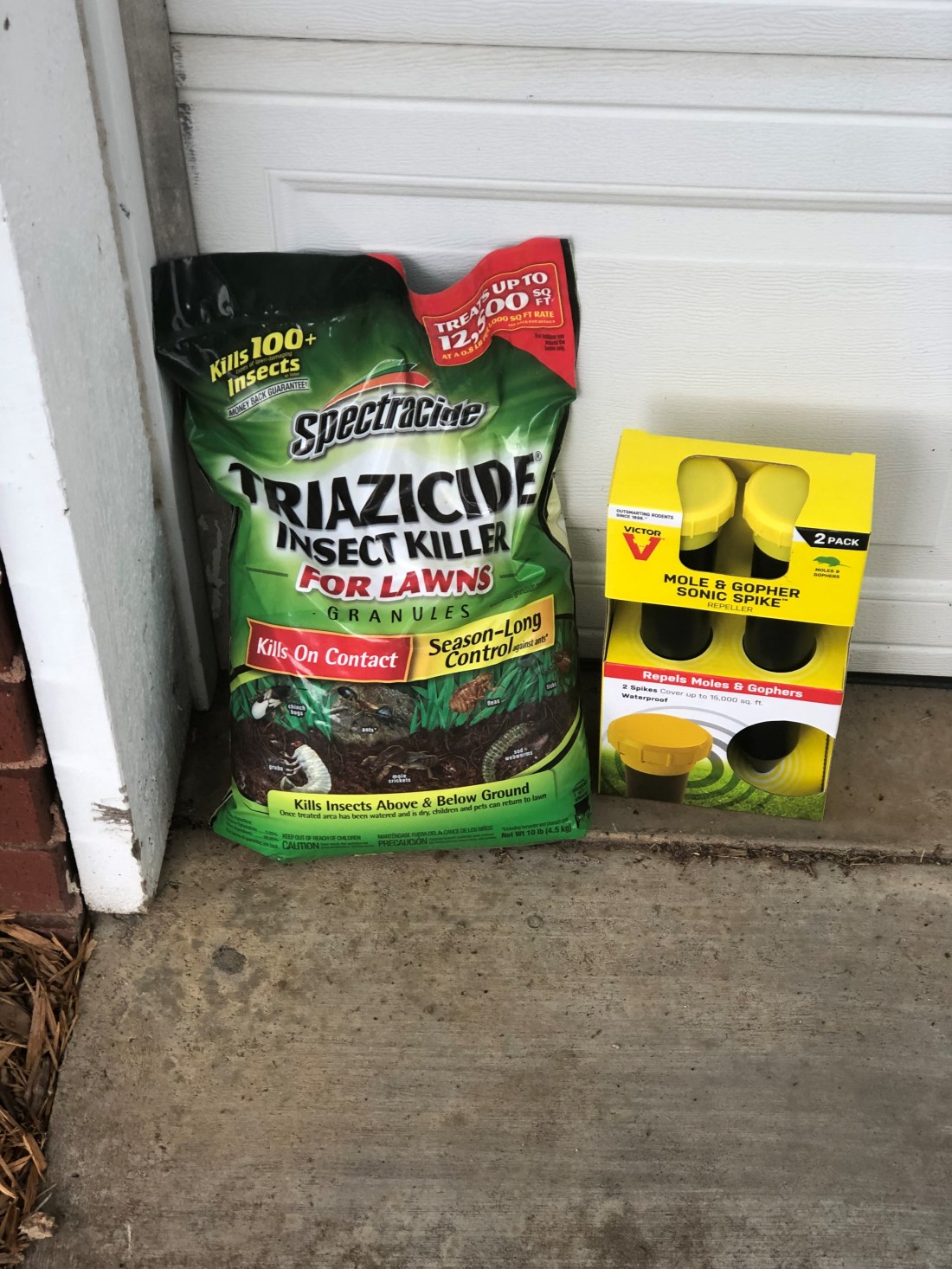
After a morning shower I decided this afternoon it was time to attack my mole problem.  When I put the batteries in the stakes they immediately began to buzz.  This was an intermittent loud and somewhat shrill sound.  Melissa’s comment was, “I hope the neighbors do not complain.”  I buried them as per instructions.  I put one in the empty Hosta bed and the other in the rose bush island.  This will give maximum coverage to the succulents we are concerned about.  When I dug the holes, it was obvious why we had moles.  Every shovel came up with five or six large worms.  I spread the insecticide on the north side and front of the house.  It is supposed to rain again this evening and that will set it in.  Now to wait 7-14 days to see if they go away.

THOUGHTS:  After not finding the Hosta at the big hardware garden center I checked the local garden center attached to the grocery store.  They not only did not have Hosta’s, they did not have any plants.  They had shut the center down except for the ceramics and a few plastic items.  Just like I treat certain species differently, the stores seem to take different approaches to staying open.  While some put large placards out front and directional signs to govern movement within the store, others have small government mandated signs on the entrance.  We accept the control over how to drive, drink, smoke, vape, and get on a plane.  Then we demand our freedom when it comes to dealing with the worst pandemic in 100 years.  Change is coming and it starts with you.
Location

Location

August 13, 2020

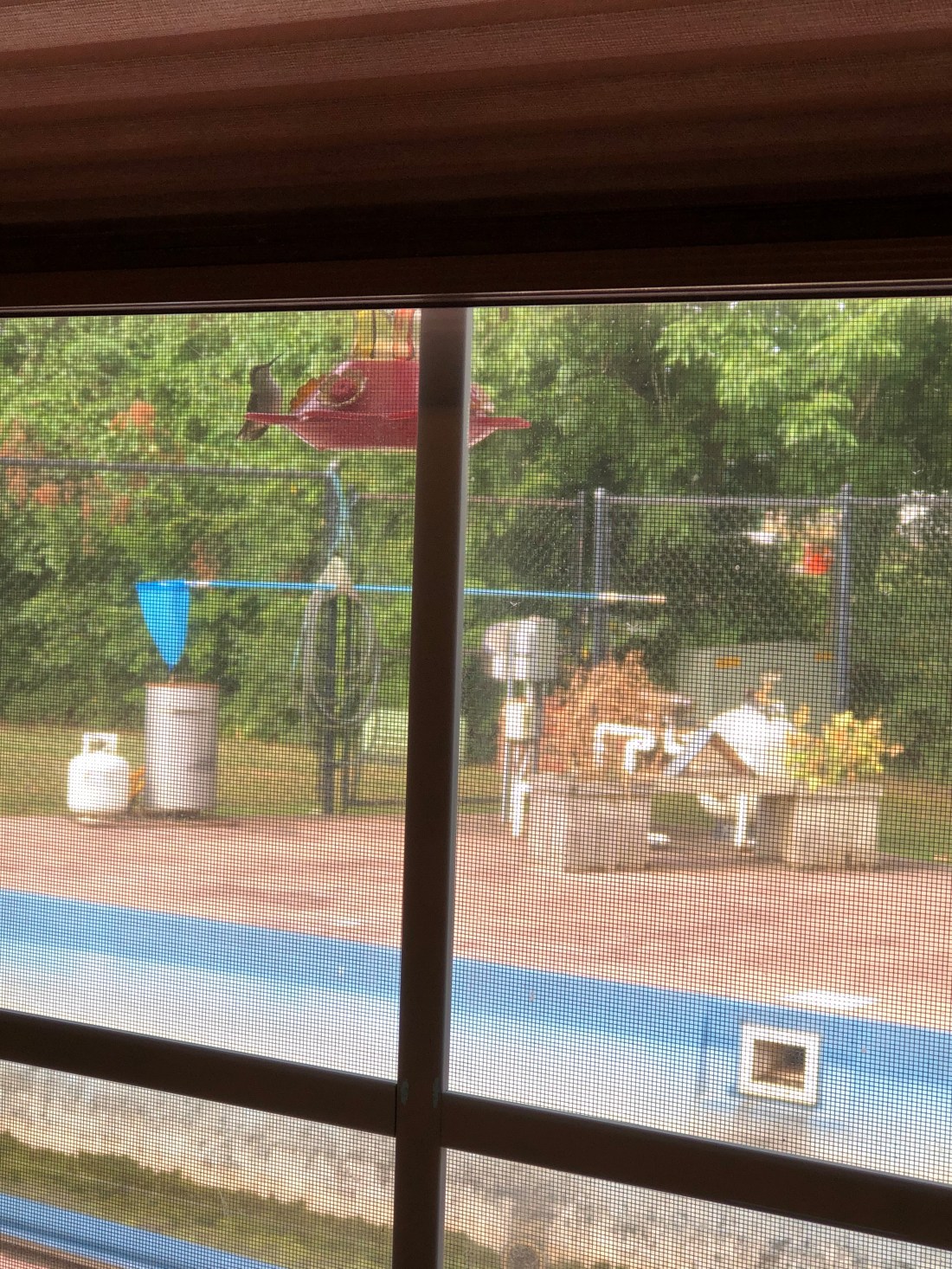
Melissa has begun to work from home two days a week.  This saves the 175 miles a day on her car and the nearly three hours she sits behind the wheel.  Since I have commandeered her office for my musings, she has taken a place in front of the bay window in our breakfast nook.  Just as I did, she has become fascinated by the coming and going of the birds in our backyard.  She had mentioned how her mom always had the hummingbird feeder in a different spot than where I had it.  This week I switched the location of the hummingbird and finch feeders to see if it would attract more birds.  Sure enough, she has seen three hummers this morning and it is not yet nine o’clock.

A saying regarding restate is a quote popularly attributed to the real estate tycoon Lord Harold Samuel, of England, “There are three things that matter in property: location, location, location.”  William Safire was asked by a college on the New Your Times Magazine to see if this really came from Samuel.  While he did use the phrase, it appears he was not the first to coin the phrase.  A real estate classified ad in the Chicago Tribune in 1926 reads, “Attention salesmen, sales managers: location, location, location.”  Although Safire did not find the origin, the phrase was in common use in 1926 Chicago when Lord Samuel was only 14 years old.

When I finally got up (even from home Melissa clocks in by 6:30 am), Melissa commented how birds seem to be creatures of habit.  While some of the hummingbirds found the new location of the feeder, more recalled where the location had been in the past.  Hummingbirds only live 3-5 years and Melissa’s mom died three years ago.  Could this be a collective memory passed on by hummingbird mothers to their young?  I do not know about birds, but this is the case with other animal species.  Nature continues to amaze and confound me.

THOUGHTS:  Even when the Cardinal feeder was empty, I would have birds sit on the fence and look forlornly into the empty dish.  The windstorm we had several nights ago blew the feeder off the fence and I have not been able to find it.  I put some of the Cardinal seed in the other feeder this morning, but I think I really need to get a feeder for the old location.  People are animals and just like others we are creatures of habit.  I have mentioned that studies have found that by 2-3 years of age children have absorbed the ethos of their culture (and not necessarily of their parents).  Like the hummingbird mothers, we need to pass on the important information to our young.  If anti-racism is not taught, it will never be learned.  Change is coming and it starts with you.
Babies

Babies

August 12, 2020

The western wildfires have received a lot of attention over the last decade.  The dry conditions and high winds have resulted in extremely hot fast-moving fires that are hard to contain.  When a fire burns through the forest it leaves charred earth and blackened trees in its wake.  This is seen as an eyesore by many.  The fires also threaten to burn the housing in the sparsely populated areas.  Ironically, suppression of naturally occurring fires is another reason the fires burn so hot.  Fires clear out the undergrowth, dead wood, and pine needles that fuel today’s devastating burns.

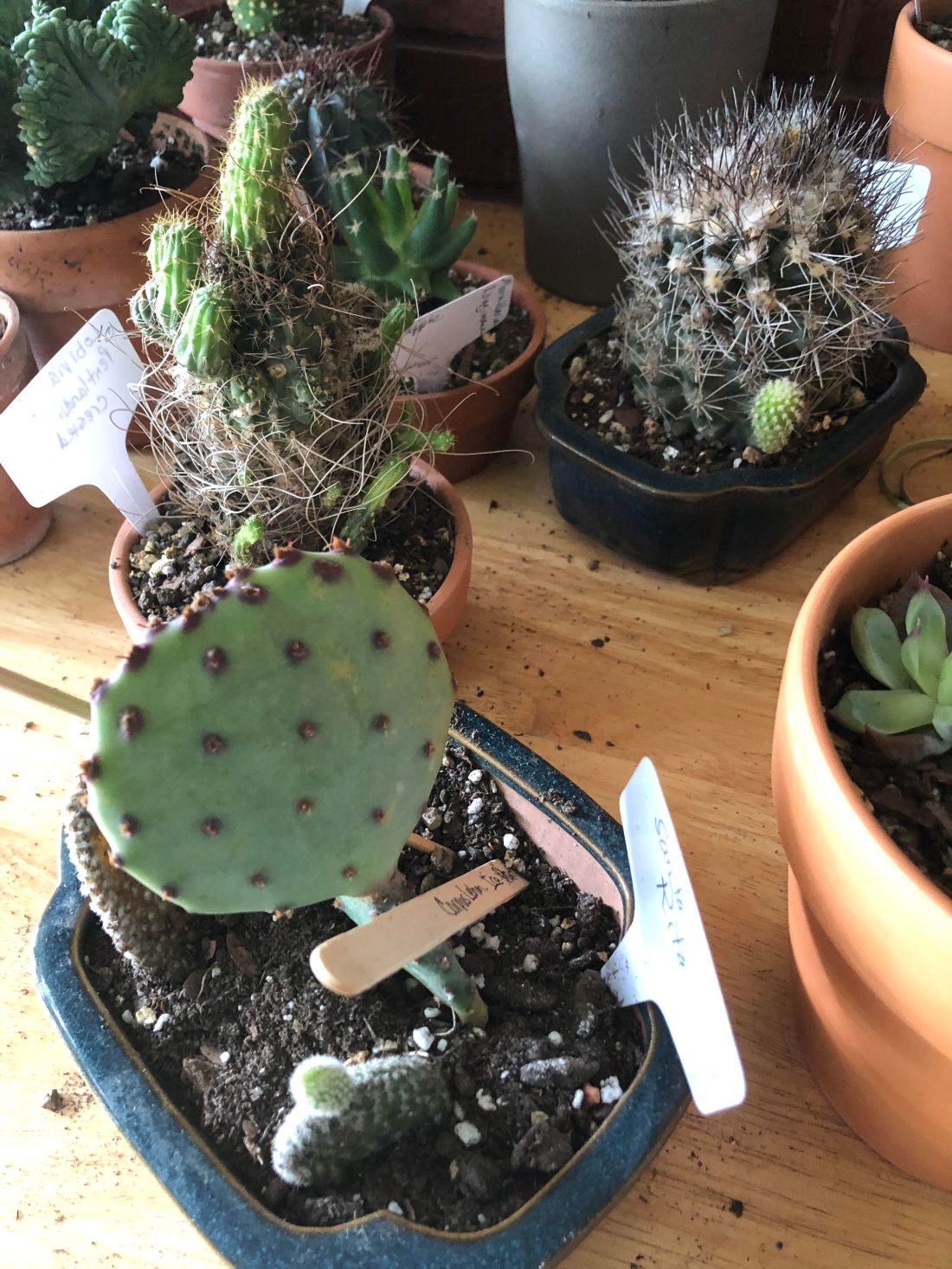
During the lockdown Melissa has been building her store of succulents.  While this started out as a hobby, it has quickly blossomed (pun intended?) into a potential business opportunity.  After potting and acclimating some of her cacti, she arranged them on a table on our front stoop.  This area is covered so it gets sun but not the full heat of the day.  It is also sheltered from much of the rain which we have received.  It seems the worst thing for cacti is overwatering, not drought.  They are flourishing amid our heat and intermittent cooling rains.  This last week some have flowered, and nearly all have sprouted “babies.”

Over the last decades biologist have found fire is necessary for growth and rebirth of many plant species.  Trees in fire-prone areas develop thicker bark to resist the fire and drop their low hanging limbs to keep the fire from getting to the green needles.  Ponderosa Pine (Pinus ponderosa) is a good example. This fire-survival strategy allows for clearing of undergrowth without damage to the trees.  In environments where hot, fast moving fires are frequent, species like the Jack Pine (Pinus banksiana) have developed very thick, hard cones that are literally glued shut with a strong resin. These “serotinous” cones can hang on the tree for years.  When a fire sweeps through it melts the resin, releasing the seeds.  The clear land and nutrients released provide excellent conditions for the new “babies” to grow.

THOUGHTS:  The natural role of fire in reproduction of trees and undergrowth illustrate how little we understand about how our world is intertwined.  While setting controlled fires is beginning to help, too often it is the uncontrolled fire that rages through the forest burning everything in its path.  While we fight the pandemic, it illustrates how globalization is forcing us to cooperate (or die).  Early globalization occurred as Europeans branched out and colonized the world.  They brought disease to the Indigenous people they encountered.  It is estimated anywhere from a low of 12 Million to a high of 112 million people lived in the Americas prior to 1492.  The native population declined to less than 6 million by 1650.  Native populations are again being devastated by this new disease.  For many, Columbus Day is not something to celebrate.  Change is coming and it starts with you.
Rebuild

Rebuild

August 11, 2020

I decided one of the problems with my planters is there just is not enough soil in them to let the plants grow healthy root systems.  Melissa’s sister is moving and selling her house, so she is trying to get rid of unwanted items.  One of those items was a 50# bag of potting soil.  She was going to throw it away, but Melissa grabbed it for her succulents.  It is not meant for them, and she would have had to mix a lot of additives to the soil to make it work, but she took it.  When I found out I asked if I could have it for my containers.

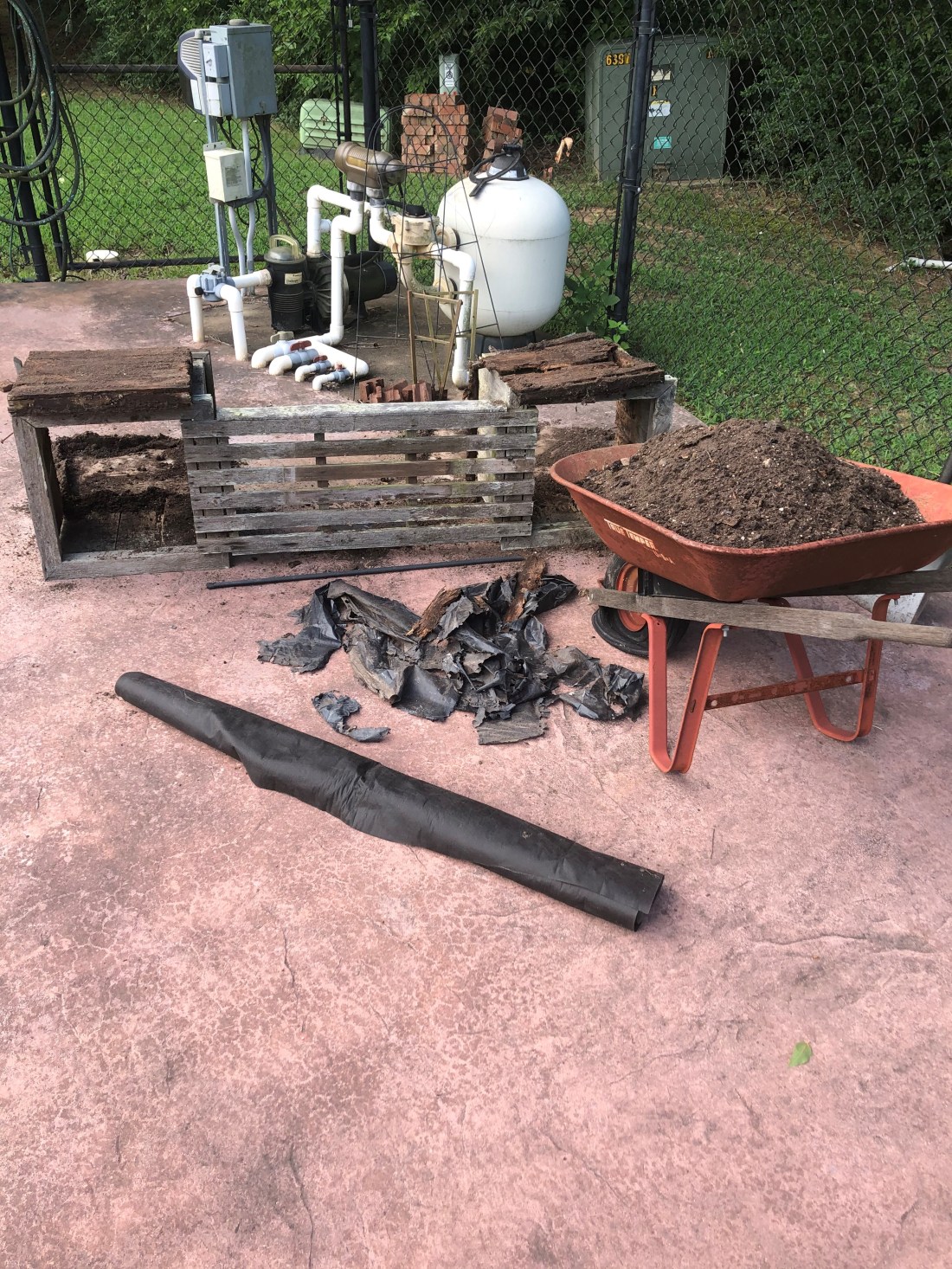
Now that I have the soil, I went out this morning to add it to the existing containers.  I started with the bench planter.  I figured I could remove the existing soil, reline the container, and then refill it with the additional soil.  Wrong!  When I started removing the soil, I was surprised by how much soil there already was.  I also saw the bottoms of the planter had rotted out on both sides.  This was not too surprising as they were built by Melissa’s father over a decade ago.

I was also surprised by how simple yet intricate the design for the planter was.  He had been a cabinet maker his whole life and knew how to put wood together.  I made some mental estimates on what it would take to rebuild the planter and took off for the local hardware.  I figured I would just browse the wood stacks, select what I need and be done.  Wrong again.  I needed to order inside and then drive through the storage shed where they would load the wood for me.  Turns out they did not have what I wanted.  I think Jerry must have custom cut and trimmed the wood in the shop he had behind our house.  I bought something close, but I will probably end up rebuilding the entire planter.  At least I understand the design.

THOUGHTS:  It seems the easy task I start out on always ends up being a larger ordeal.  You would think by now I would have learned that simple reality.  Most of the wood I purchased will not be usable on the old planter.  I think I can use some of it to rebuild, but most of it will end up in a new planter that can sit on the deck alongside the old one.  The task of starting difficult conversations appears simple on the surface.   What I have found is it has become more work than I expected.  These conversations are popping up all over the internet and on TV.  They take work to start, but persistence to continue.  We need to realize this has always been a lifetime pursuit for each of us.  Change is coming and it starts with you.
Grease

Grease

August 10, 2020

I have mentioned that Melissa and I have changed the way we eat during the last eight months (yes, even before being locked down).  This includes eating more vegetables and preferring leaner cuts of meat.  We are also trying to cut down on fried foods.  When we do fry, we try to use a small amount of olive oil or even the olive oil sprays.  These are not only less calories, but I have read the vegetable oils are bad for you.  The unsaturated fats found in vegetable oil oxidize when they are heated, making them more dangerous to body tissues.  They can cause inflammation which is a known risk for making blood-vessel plaques unstable.  At times enough to cause a heart attack.

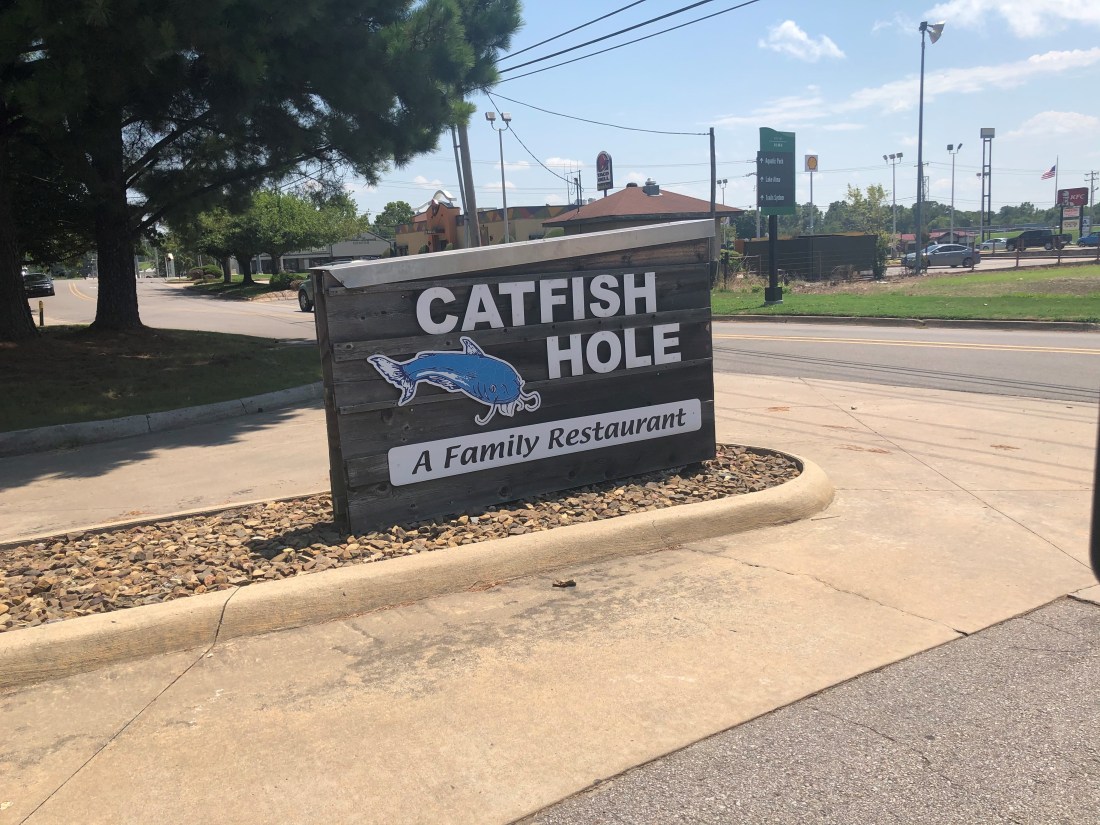
Since the closure of restaurants earlier this year we have been making most of our own meals and only eating out occasionally.   Often when we do eat out it is to return to the restaurants and the foods we used to love.  We dropped by one of these haunts on the way home for some Southern fried catfish.  They have been either closed or serving takeout only and are located 40 minutes from where we live.  Now the dining room is open, with masks and at half capacity.  I noticed another change in the updated sign along the street.  For as long as I can remember it read The Catfish -ole.  I guess they had time to put the “H” back on and repaint the sign.

I opted for the fried clams, but Melissa went with the small catfish platter.  This came with all the trimmings, dill pickles, sliced red onions, coleslaw, pinto beans, hushpuppies, and french fries.  Both of us had trouble with our stomachs in the afternoon.  I commented that I had also had problems after eating a fried Ruben last week, and Melissa said she can now only eat certain things without having problems.  We both realized what was causing the problem was the amount of grease found in the restaurant food we loved.  This used to be a favorite staple, but it now seems to come with consequences.

THOUGHTS:  In college I read an ethnologist’s book on the time he spent with the Inuit’s in Northern Canada.  They primarily subsisted on caribou meat.  The others lavished the fatty parts of this meat, but he stayed with the leaner cuts.  After living among the people for several months he found himself getting sick.  His friends took a can of caribou fat and melted it on the fire.  He drank this down ravenously and got better.  It seems caribou store vitamin C in their fat and in the frozen north, there was nowhere else to get it.  This is like the limes kept on old sailing ships to prevent scurvy.  Customs can be quite different between cultural groups, but when we listen and learn we often find there is a good reason.  Change is coming and it starts with you.
Moles

Moles

August 8, 2020

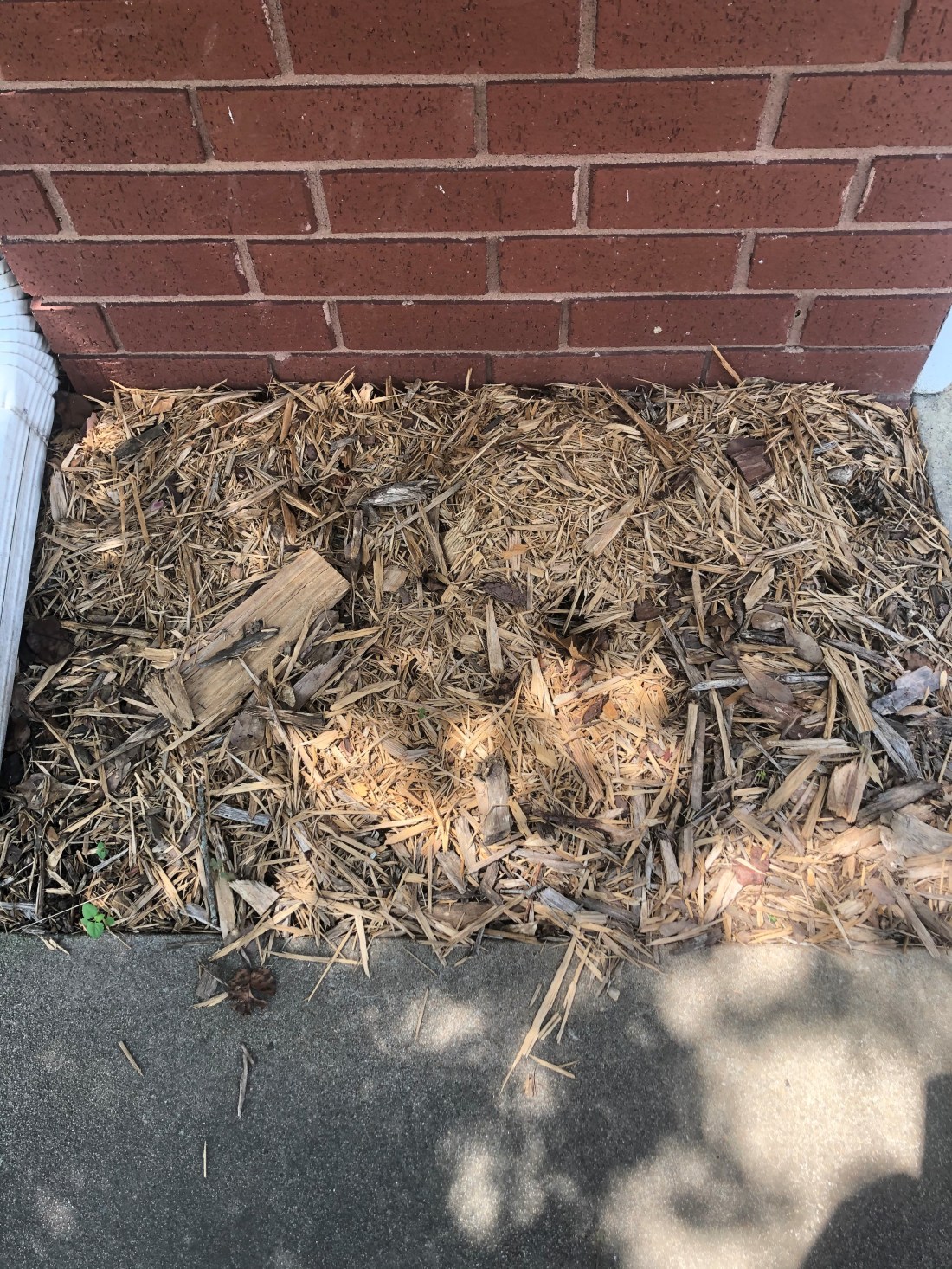
I have written about the Hosta that sit on either side of our driveway up against the garage.  One of the two had really flourished.  It bloomed early and the plant was full and lush.  I did have some early pests gnawing on the leaves, but a sprinkling with Sevin took care of that.  You can imagine my surprise when I came out several days ago and the plant appeared to be dying.  The leaves had yellowed and turned brown.  I could not see any pests on the leaves and could not understand why it was dying while the others continued to do well.  When I checked on it yesterday it was completely gone.  All that was left was a small hole amid the mulch.  That is when I knew the cause.  Moles!

When I lived in Wichita, I had a mole invasion in my front yard.  I tried everything I could think of to get rid of them.  Some suggested the best way to get rid of moles is to set mole traps.  These are like underground mouse traps and will kill the moles, which can then be disposed of.  I was not too keen on killing the moles.  I did not want them dead, just gone. I finally hit on mole stakes.  These were battery powered stakes that sent constant vibrations into the surrounding ground.  This discourages the moles from setting up in your yard.  It worked for me because most of them left.  They moved next door to my neighbor’s yard.  I finally resolved the problem when I sold the house.

Melissa said they had problems with moles occasionally in the past.  I noticed them when we moved in that first summer but did not pay much attention.  Since I have been spending more time caring for the yard, I have seen more activity.  I asked my neighbor if he knew how to get rid of moles and he said his father always used the pinwheels you can get in toy stores.  He did not know if they worked, but his father swore by them.  I purchased five of them and placed them around the yard.  I am still seeing runs and now my Hosta is gone.  Time to buy some more stakes.

THOUGHTS:  I again checked online about getting rid of moles and found the only sure method is spring-loaded traps.  I do not like to kill things if I can find a way to peacefully coexist.  The squirrel in my bird feeder and the moles in my yard all have a purpose in maintaining proper ecosystems.  While they can be destructive, they provide a necessary balance.  Just as they adapt to the changes I have made in my yard and garden; I need to adapt my actions to their increased activity.  It is part of learning to live together.   You would think that would be a good lesson when interacting with people as well.  Change is coming and it starts with you.

Flood

August 7, 2020

Last night we had a storm that brought flooding to our yard.  When I checked the totals, we only got a little more than a half an inch, but it all came in a 20-minute period.  The result was the ditch behind our house was overflowing into the neighbor’s yard and the low area in our front yard had a stream of running water flowing toward the drains.  We have had some big rains, but this was he most intense since we moved here.  Our gardener friend said her yard was looking the same with water flowing, although it did not impact her vegetable beds.

Several months after becoming the director of a conference center in Kansas we got what was described as a 500-year flood.  I checked on the rising water several times during the downpour.  The water submerged the road and cut the camp off from the nearby town.  Luckily, our house was on a raised section of land as everything around us was under water.  I had checked on the conference center at 11:00 pm the night before and then went in early the next morning.  The water had subsided, so I felt safe.  As I unlocked the door, I saw small pools of water on the tile.  When I stepped on the carpet, I felt the squish.  The water had risen to about two inches inside the building (from marks on the walls) and then quickly dissipated.  What a way to start.

While the rain falling in the area does raise the water level of the Arkansas River, its impact is felt downstream and not her.  The problem we had last year is the large amount of rain that fell in the Wichita to Tulsa area.  This was too great for the land to absorb and ran off into the creeks and streams, which all deposited into the river.  This quickly filled the reservoirs and forced the Corps to release the excess into the already swollen river.  The Arkansas River rose to a record 40.79 feet and flowed at an estimated 570,000 feet per second at the Van Buren gauge.  The river at its height affected hundreds of homes and thousands of residents in the region and cost Arkansas and Oklahoma millions of dollars in economic impact.

THOUGHTS:  When I heard 500 hundred-year flood I assumed that meant it would only happen once every 500 years.  I was wrong.  The phrase means it is predicted to occur once during a 500-year period.  Rain patterns come in cycles.  You tend to have a series of wet years followed by a corresponding series of dry years.  If you put enough dry years together you have a drought.  In contrast, flooding can take one bad storm.  The pandemic has hit the world like one bad storm.  Fauci (et al.) got us through the Ebola scare by acting quickly to contain the virus at its origin.  America’s refusal to acknowledge covid-19 as a threat has had the opposite effect.  With schools set to reopen this month we can only wonder.  Change is coming and it starts with you.


Ethanol

Ethanol

August 6, 2020

I came across a new sales gimmick at our local gas station.  I usually get gas at the grocery where I shop and had just got back from that store (and a trip to the station associated with it).  I had forgotten to bring my gas can and needed to get gas before I could mow.  The gas in town was a little more per gallon, but I figured by the time I drove to the cheaper gas I would have eaten my saving.  I put my can in the truck and headed across the street to another station.

Many might be too young to remember the gas wars local filling stations used to wage.  There were two stations on the corner near my grandfather’s farm and they always seemed to be trying to undercut each other.  Gas was usually around 19 cents, and the lowest I remember was 6 cents.  My dad looked forward to filling up every time we went to see “Clarence.”  These were both independent stations, so they were not mandated to sell at a set price.  This was also prior to the oil embargo in October of 1973, so gas was selling for $3 a barrel instead of the $12 it jumped to by the following year (in contrast to the $43 per barrel today).

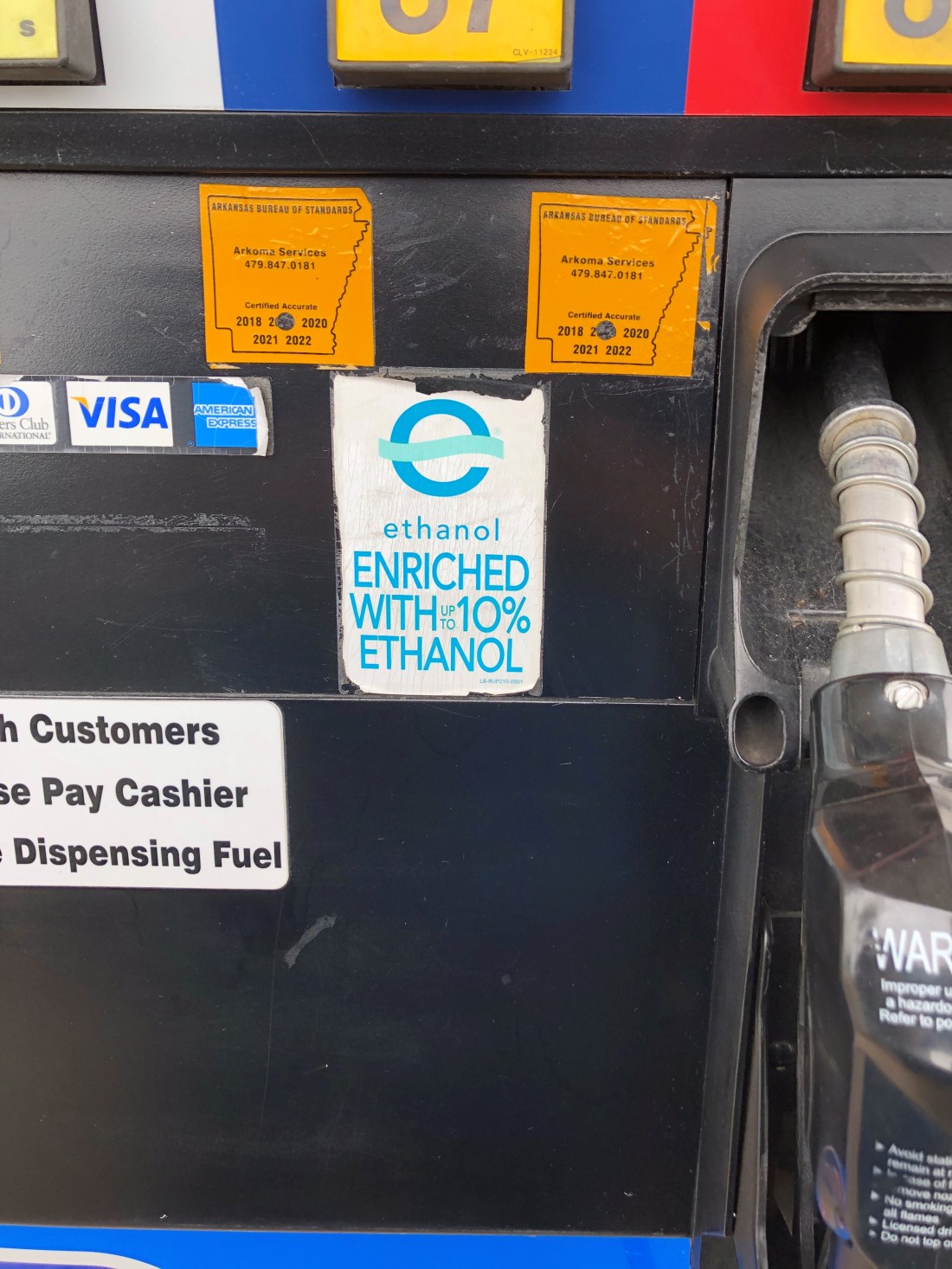
The sign on the local station’s pump proudly proclaimed, “Enriched with 10% Ethanol.”  I never thought mixing ethanol in gas was a good thing.  Today’s engines need higher octane to run efficiently and ethanol is a cheap way to raise the octane of a low-grade gasoline.  Much of the biomass used to make ethanol is grown in politically important states like Iowa.  It is no surprise that ethanol in gasoline is mandated by Congress. It started with the 1990 Clean Air Act and by 2019, 14.5 billion gallons of ethanol were mixed into the U.S. gasoline supply annually.

THOUGHTS:  The good news is ethanol is a cleaner fuel than gasoline, and it helps reduce emissions.  The bad news is ethanol has about 33% less energy than gasoline, and at a 10% mix, yields 3% less fuel economy than straight gas.  Ethanol evaporates more than gasoline (a major source of air pollution).  The land and resources (like gas) used to make ethanol are not available for other purposes (like food), and the rain forests are cleared to grow sugarcane.  Corporations, politics, and farming tied together.  Imagine that.  Change is coming and it starts with you.