
August 12, 2025
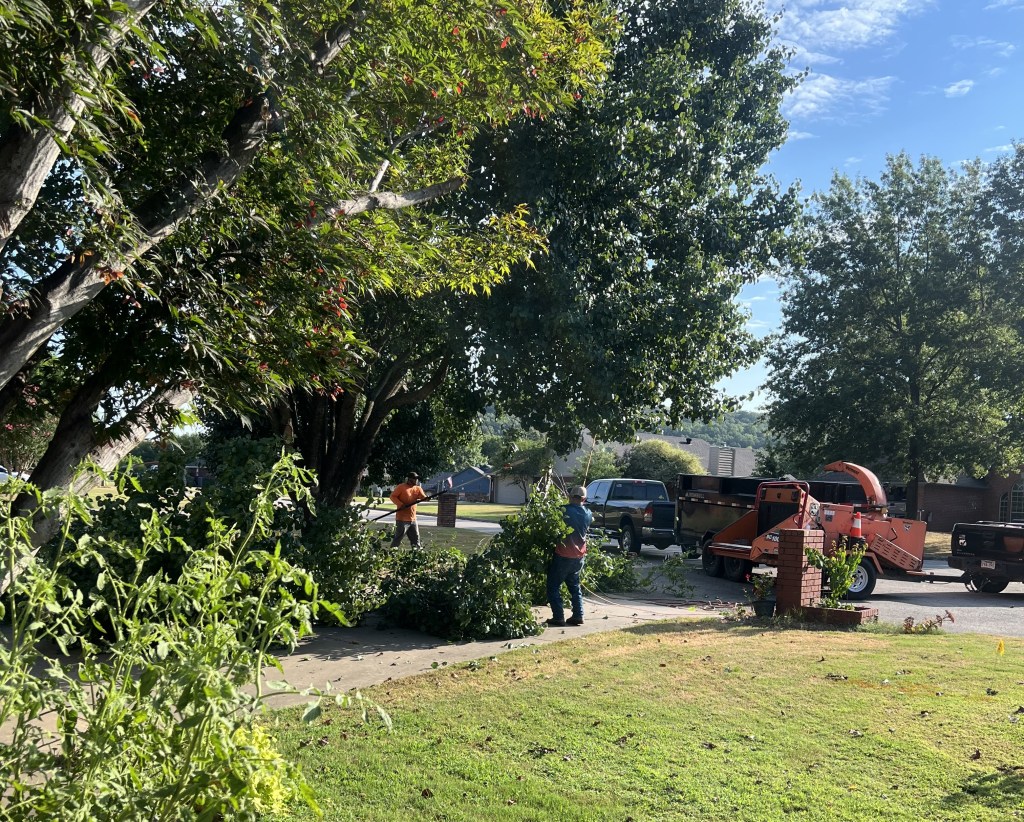
I came across another example of how one decision leads to the necessity of making others this week. We have been checking out buying a motorhome for the last eight years. We began when we still lived in Kansas, but after the move to Arkansas the concept fell off our radar. This last year my sister and brother-in-law purchased a small teardrop trailer with their son and then a larger trailer for their use. They camped most of their married life, so this was not a surprise. She told us that while it was cheaper to stay in a hotel than buy and maintain a trailer, they enjoyed the outdoor freedom. One reason I (and now Melissa) retired was to travel. Now that we have the kids, this has become problematic (for me). It is more difficult to find a hotel that allows pets (not impossible) and even more so now that we have 175 pounds (75 kg) of dogs. Boarding is a possibility but adds another US$1,000 to the vacation. That moved us to buy a Class C motor home. These vehicles are smaller than the Class A motorhomes and have slide-outs for maximum square footage. The purchase meant we also needed to decide where to keep the vehicle. The fenced side yard was an obvious choice, but that meant we needed to enlarge the gate and cut down a tree for access. While I could have taken days to cut the tree and haul it to the dump, we decided to call an arborist.
When I went online, I found arboriculture is the cultivation, management, and study of individual trees, and other perennial woody plants, and a person who practices or studies arboriculture is called an arborist. The science of arboriculture studies how these plants grow and respond to their environment. The practice of arboriculture includes techniques for selection, planting, training, fertilization, pest and pathogen control, pruning, shaping, and removal. A tree surgeon is more typically someone who is trained in the physical maintenance and manipulation of trees and more a part of the arboriculture process rather than an arborist. Risk management, legal issues, and aesthetic considerations have come to play prominent roles in the practice of arboriculture. Businesses often hire arboriculturists to complete “tree hazard surveys” and generally manage the trees on-site to fulfill occupational safety and health obligations. Arboricultural matters are also considered to be within the practice of urban forestry, yet the clear and separate divisions are not distinct or discreet.
Both the arborist and the fence man showed up at the same time today. While they were working in the same area of the yard, they did not seem to interfere with each other. The tree came down in a matter of hours (not my days) and the limbs were either ground or stacked in 15-inch (38cm) lengths to be used as firewood when we go camping. The fence took a little longer. It needed two posts removed and another set. This shortened the total area but allows for a 12.5-foot (3.8 m) entrance. That is enough to safely drive my 10 foot (3 m) wide motor home through the gate and park it in an enclosed area. As I said, one decision often leads to several others.
THOUGHTS: One of the reasons people call an arborist is the perceived risk of death by falling trees. This is influenced by media and often hyped, and the risk has been reported to be close to 1:10,000,000, or almost as low as death by lightning. Trees in urban green spaces and their careful conservation are sometimes in conflict with aggressive urban development, despite how urban trees contribute to livability of suburbs and cities objectively (reduction of urban heat island effect, etc.) and subjectively. Tree planting programs implemented by a growing number of organizations and cities are mitigating the losses and often increasing the number of trees in suburbia. This includes planting 2 trees for every 1 tree removed or paying landowners to keep trees instead of removing them. Each tree absorbs about 55 pounds (25 kg) of C02 annually. My two fruit trees help replace the one Bradford pear (Pyrus calleryana). Act for all. Change is coming and it starts with you.
 A travelers odyssey