
December 27, 2025
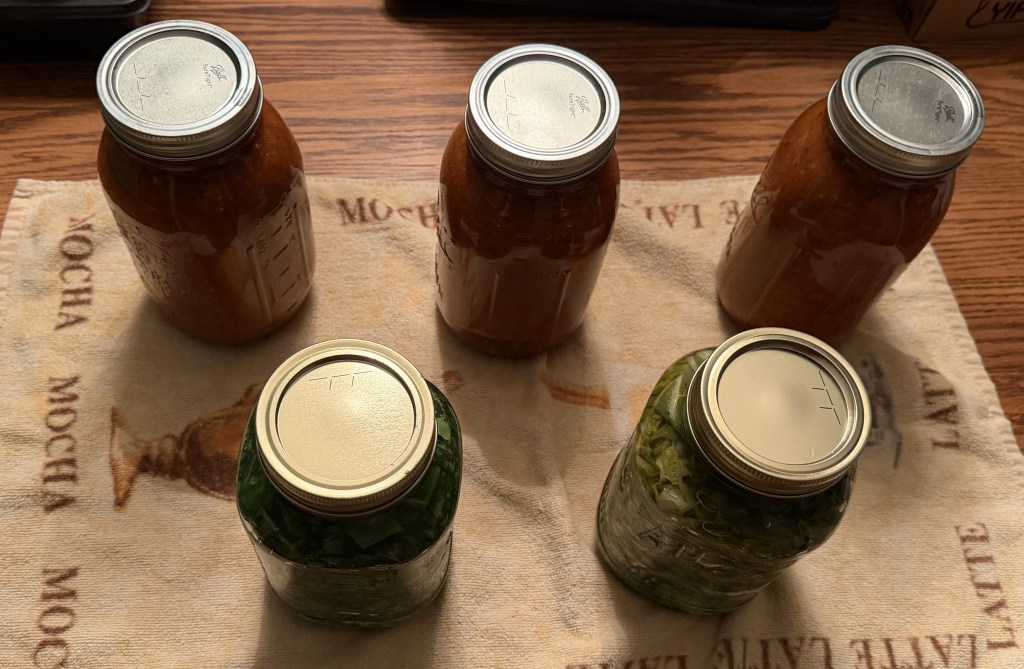
Back in August I blogged about my first attempt to grow a second yield in my raised beds (2nd Crop). I replanted several of the vegetables that had done well in the spring (and that I liked). For some reason, few of the vegetables sprouted. What sprouted were the cabbages, cauliflower (both Brassica oleracea), and about half of the peas (Pisum sativum). When it looked like we were going to get our first freeze in November I had covered the plants with bed sheets held above the plants with garden hoops. I had done this in previous years and found it to be effective (and reusable). The peas were harvested and eaten in salads prior to our trip, but I just let the brassica go to see if they would ever mature. The cabbage never did head and the cauliflower never balled. I thought about tearing them out, but the plants still had robust leaves. Last week I finally gave up and pulled the plants. I did not know what I would do with them, but cabbage leaves were the garden’s last fruits.
When I went online, I found cabbage leaves are completely edible, including the outer ones. The texture and flavor will vary from the inner leaves. Both types of leaves can be used raw in salads, cooked in soups, sautéed, or even used as wraps for other fillings. The outer leaves are tougher but also more nutritious due to their exposure to the sun and can be blanched or used as wraps or stuffed as rolls. The inner leaves are more tender and sweeter and are good for raw applications. All the leaves should be washed to remove dirt and checked for insects and bad spots before preparation. I ended with a large pile of outer leaves and a smaller pile of inner (sorta) leaves that I decided to make into sauerkraut anyway. I washed the leaves, cut out the woody stems, and sliced the outer leaves for over an hour before the amount of work made me rethink processing the entire pile. Instead, I went with what I had and then processed the smaller pile of inner leaves in the same way. Sauerkraut was still a long way off, so I put the bowls of last fruits in the refrigerator
Two days later (today) I decided to finish processing my last fruits. I added salt to the bowls of leaves and kneaded it for 5 minutes to break the leaves down and then packed them into quart jars, one for the outer leaves and another for the inner. Working with my last fruits got me motivated to work the tomatoes frozen tomatoes (Solanum lycopersicum) and sweet peppers (Capsicum annuum) from August into more canned pasta sauce. I added two red onions (Allium cepa) and three cans of diced tomatoes from the pantry along with spices and simmered it for four hours to render it down and meld the flavors. While the sauce was finishing up, I brought the water bath to boil to sterilize four 1-quart jars and lids. While I only used three, I have found it is easier to not use a jar than try and prepare another jar while everything else is ready. I transferred the sauce into the jars, added lemon juice (for acidity), and let them boil for 45 minutes. My last fruits were finished.
THOUGHTS: When we went to dinner with our gardening friends just before Christmas, I told her I had harvested my last fruits and planned to make sauerkraut. That was when she asked if I had started planning what to grow in my beds and containers next year. While I have begun to think about next year, there is hardly a plan. That is the thing about gardening (or farming), you can never stop planning, or you will quickly get behind. The same can be said for reaching out to those who need help. If you do not plan and then act to make a difference, you will be overcome by apathy. Act for all. Change is coming and it starts with you.
 A travelers odyssey