
September 07, 2026
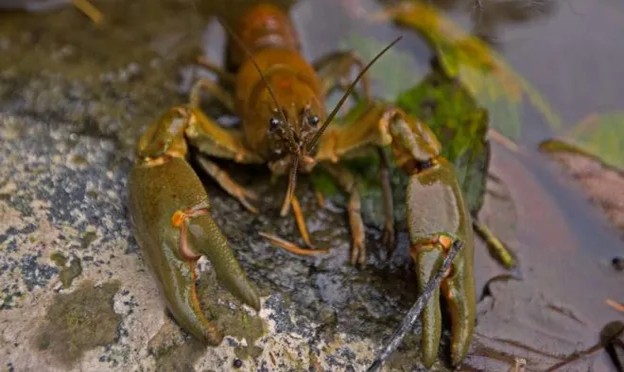
Last month my local newspaper carried a USA Today article about the non-native crayfish (Family, Cambaridae) who are massing below Glen Canyon Dam for a potential invasion of Grand Canyon. National Park Service (NPS) biologists say the invasive species has caused ecological havoc in other streams and has now shown up by the thousands in agency nets below the dam. There have been more than 3,000 netted so far this year in a short stretch of the Colorado River where last year they found just over two dozen. NPS Colorado River Coordinator Nicki Gibney also reported a boom in non-native fish, including bluegills (Lepomis macrochirus) and sunfish (Family, Centrarchidae). These invaders and the crayfish are thought to have slipped through the dam’s hydropower turbines and are benefiting from the warm water the dam releases as long-term drought and water demand pushes Lake Powell’s warm surface closer to the power plant’s intakes. This same phenomenon has favored smallmouth bass (Micropterus dolomieu), which the government has taken emergency measures to keep from reaching and eating rare native fish in the Grand Canyon. While several species of crayfish are present, the dominant species is the virile.
When I went online, I found the virile crayfish (Faxonius virilis) is a species of crayfish also known as the northern crayfish and eastern crayfish. The species was reclassified in August 2017, and the genus changed from Orconectes to Faxonius. The virile is native to the central US, east to tributaries of Lake Erie, Lake Ontario, Lake Champlain and the St. Lawrence River in New York and much of Canada. Individuals can be found hiding from predators under stones and logs in lakes, streams, and wetlands. They are identified by the brown or rust-red carapace (cephalothorax) and large pinchers (chelipeds), which are usually blue in color. Crayfish can grow to 6.9 inches (17.5 cm) in length, and their walking legs have a small claw at the end. The virile feeds on a wide range of invertebrates and plants, along with tadpoles and even small fish. Faxonius virilis is used as fishing bait, as food for humans, and as aquarium food for carnivorous fish. The virile has become an invasive species in parts of North America outside their native range and was discovered in the UK in 2008. It is listed as a species of Least Concern on the IUCN Red List.
The virile crayfish is an especially vexing invader because it can march uphill around cascades that fish might not reach, Southwest Wildlands ecologist and work group member Larry Stevens said. Stevens called this, “an existential threat to the last remaining pristine streams — some of the last ones — in the West. Crayfish are dominant in many of the streams in Arizona and Utah.” The virile represents another developing threat to the Grand Canyon’s nature in a time when climate change is challenging the government’s ability to react. After two summers of releasing cold shocks of water to prevent bass spawning and protecting the park’s humpback chub (Gila cypha) population. The Interior Department’s Bureau of Reclamation announced they could not spare the water this summer as Lake Powell’s decline is threatening the dam’s ability to produce power. Without the aid of cold water, officials are electrofishing and netting in the river to remove invasives.
Thoughts: The influx of the virile crayfish and other warm water invasives illustrate another aspect of how climate change is impacting native populations. Warmer temperatures allow invasive species to move farther north and draught forces agencies to choose between the demands of humans and the needs of local ecosystems. Earth’s hottest year on record is 2024, with 2023 and 2025 tied at second. Models suggest 2026 is likely to break those records. Climate change about fluctuating extremes more than just warmer temperatures. In the US we have floods in the East and draughts in the West. The rest of the world faces similar patterns. Act for all. Change is coming and it starts with you.

