
October 20, 2026
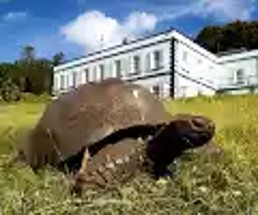
Inside the front section of last week’s newspaper was a Reuters article about the world’s oldest-known terrestrial animal. Jonathan is an Aldabra giant tortoise estimated to be about 194 years old. The tortoise was likely from the Aldabra Atoll and brought to the remote South Atlantic island of St Helena as a fully grown animal in 1882. The tortoise now resides in a paddock at Plantation House, the governor’s residence. “Other Aldabra tortoises have been claimed to have lived as long as Jonathan, but he has the most documentary evidence supporting his age,” said Benjamin Vaisvil, a researcher affiliated with the organization Kallel and co-lead author of the study published on October 7tn in the journal Science Advances. Scientists have studied Jonathan for the animal’s longevity, sequencing his genome and analyzing his chemical markers that control which genes switch on and off (epigenome). “We found changes in Jonathan’s genome in pathways associated with longevity, like DNA repair, mitochondrial function, insulin regulation and telomere function.”
When I went online, I found the Aldabra giant tortoise (Aldabrachelys gigantea), or Aldabra tortoise, is a species in the Family Testudinidae and genus Aldabrachelys. The tortoise is endemic to the Seychelles islands located in the western Indian Ocean, northeast of Madagascar and roughly 1,000 miles (1,600 km) east of mainland Africa. The first scientifically described (nominate) subspecies (A. g. gigantea) is native to Aldabra atoll. The tortoise’s upper shell (carapace) is brown or tan in color with a high, domed shape. Males’ carapace averages 48 inches (122 cm) in length and have an average weight of 550 pounds (250 kg). Females are generally smaller with and average carapace length of 36 inches (91 cm) and weighing 351 pounds (159 kg). [The species has stocky, heavily scaled legs to support its heavy body. The neck is long, which helps the animal to feed from tree branches 39 inches (1 m) from the ground. The species is one of the largest tortoises in the world.
Despite his age, Jonathan retains a voracious appetite, lifting his head and stretching out his long neck when the veterinarian calls his name. “I know he knows me, knows my voice and my handling, and I also know it isn’t love on his part but a recognition of the arrival of a feast,” said longtime veterinarian and study co-author Joe Hollins. Jonathan has lived through world wars and the rise and fall of empires. “He is symbolic of resilience, longevity, endurance, a persistent presence throughout huge historic events,” Hollins said. Giant tortoises were historically found on many of the western Indian Ocean islands, as well as Madagascar, and the fossil record indicates giant tortoises once occurred on every continent and many islands, except for Antarctica. Many of the Indian Ocean species were thought to be driven to extinction by over-exploitation by European sailors, and they were all seemingly extinct by 1840 except for the Aldabran giant tortoise on the island atoll of Aldabra, although some remnant individuals may remain in captivity.
Thoughts: I remember visiting a petting zoo as a small child that featured a giant tortoise that you could ride. I watched as little boys climbed on and then kicked the shell yelling, “Yah!”, trying to make the animal move faster. This was despite a sign requesting you refrain from kicking. I now wonder if the captive animal was happy with its longevity. Humanity’s quest for longevity has shifted from ancient myths of immortality and the elixir of life to a multi-billion-dollar scientific and biotech pursuit focused on extending healthspan (years free of chronic disease) rather than just lifespan. Life expectancy in the US reached 79 years in 2024. Scientists note human life expectancy maximizes around 85 years, with a hard maximum human lifespan around 122 years. We need to live the life we have to the best of our ability. Act for all. Change is coming and it starts with you.

